Fish are fascinating creatures that inhabit most of the world's aquatic environments. With around 30,000 different species, their diversity is astonishing. This article focuses on the different types of fish, their classification, characteristics, and notable examples.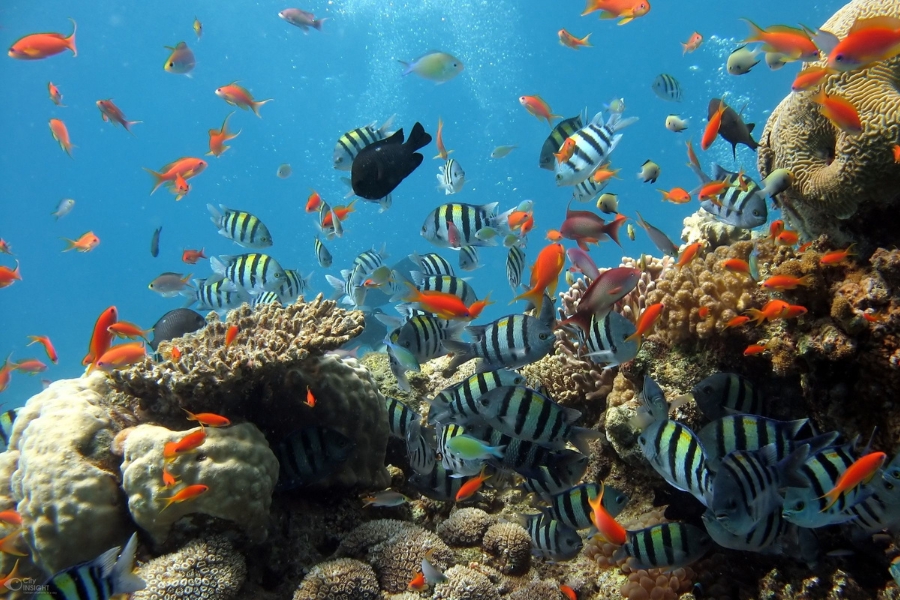
What Are Fish? Definition and Key Characteristics
Fish are aquatic vertebrates that belong to the class *Pisces*. They have bodies adapted to aquatic environments, with structures such as fins that help them swim and gills that allow them to breathe underwater. Their bodies are covered with scales, which provide protection and reduce friction as they swim.
Fish are also ectothermic, meaning their body temperature depends on their surroundings. They are essential to aquatic ecosystems: they occupy lower levels of the food chain and serve as food for many birds, mammals, and other animals.
The diversity of types of fish is impressive, ranging from tiny fish, such as aquarium goldfish, to gigantic sharks that dominate the oceans.
What Are the Types of Fish? A Detailed Classification
Fish are classified into three main groups:
- Agnathans: Jawless fish, such as lampreys and hagfish.
- Chondrichthyans: These include sharks and rays, which have cartilaginous skeletons.
- Osteichthyans: These are bony fish, which have calcified skeletons and make up the most diverse group.
Each of these groups has unique characteristics that allow its members to adapt to different environments. For example, agnathans are known for their elongated bodies and ability to attach themselves to other fish, while chondrichthyans have a hydrodynamic shape that makes them efficient swimmers.
What Are the Characteristics of Fish? Key Facts
Fish have a range of characteristics that distinguish them from other animals. Some of the most important are:
- Gill breathing: They use gills to extract oxygen from the water.
- Scales: Their bodies are covered with scales that provide protection.
- Fins: These structures help them swim and maneuver in the water.
- Reproduction: Most fish reproduce by laying eggs, although some are ovoviviparous.
Fish also have diverse diets; depending on their species and habitat, they may be carnivores, herbivores, or omnivores.
What Are the Types of Edible Fish? Differences Between Fatty, Lean, and Medium-Fat Fish
In cooking, it is important to understand the differences between types of edible fish. The main groups are:
- Lean fish: These fish generally contain less fat, including hake, sole, and cod.
- Fatty fish: These fish have a higher fat content and are rich in omega-3, including tuna, mackerel, and salmon.
- Medium-fat fish: They have a moderate fat content, such as swordfish and pike.
Each type of fish offers different nutritional benefits, and choices depend on the recipe and personal preferences.
Where Do Fish Live? Main Habitats and Adaptations
Fish can be found in a variety of aquatic habitats, including:
- Oceans: Most species live here, from coral reefs to the ocean depths.
- Rivers and lakes: Freshwater fish are adapted to environments with lower salinity.
- Brackish water: These habitats contain a mixture of fresh and salt water, as in estuaries.
Each of these habitats requires specific adaptations, such as osmoregulation, which allows fish to maintain the balance of salt and water in their bodies.
What Are 10 Examples of Fish? Variety and Common Examples
There are thousands of fish species, but here are ten representative examples:
- Goldfish: A popular aquarium fish.
- Clownfish: Known for its bright colors and symbiotic relationship with sea anemones.
- Tuna: A large, blue fish that is highly prized in cooking.
- Salmon: Rich in omega-3 and famous for its migrations.
- Trout: Common in freshwater and highly valued by anglers.
- Shark: An iconic marine predator belonging to the cartilaginous fishes.
- Ray: With a flattened body, it is also classified as a cartilaginous fish.
- Catfish: Freshwater fish known for their barbels.
- Barbel: A freshwater fish commonly found in rivers and lakes.
- Angelfish: Popular in aquariums for its beauty.
Each of these fish has unique adaptations that allow it to thrive in its environment.
Related Questions About Types of Fish
What Are the 10 Fish Families?
Fish families are classified according to shared characteristics and may include groups such as:
- Salmonidae: Includes salmon and trout.
- Characidae: Known as the characins.
- Cichlidae: Freshwater fish such as cichlids.
- Cyprinidae: Includes carp and barbel.
- Clupeidae: Includes sardines and herrings.
Each fish family has specific characteristics and habitats, contributing to the rich diversity of aquatic life.
How Are Fish Classified?
Fish are classified primarily according to their fat content and the type of habitat they live in. The main classifications are:
- Freshwater fish: Such as trout and pike.
- Saltwater fish: Such as tuna and cod.
- Processed fish: Such as canned fish.
This categorization helps the fishing and culinary industries offer consumers suitable options.
What Are the 3 Groups of Fish?
Fish are grouped into three broad categories:
- Agnathans: Jawless fish.
- Chondrichthyans: Fish with cartilaginous skeletons.
- Osteichthyans: Fish with bony skeletons.
Each group has distinct adaptations and characteristics that allow its members to survive in their respective environments.
What Are 5 Types of Fish?
Some of the most common types of fish include:
- Tuna: Popular in cooking and high in omega-3.
- Cod: Known for its mild, white flesh.
- Hake: A white fish commonly used in a variety of dishes.
- Mackerel: Oily fish rich in healthy fats.
- Trout: Commonly caught for recreation and highly valued.
These fish offer a variety of flavors and nutritional benefits and are a staple of diets in many cultures.