The quokka is an Australian marsupial known for its adorable appearance and reputation as the “happiest animal in the world.” These small mammals have captured the public’s attention and become a symbol of Australian wildlife.
Next, we’ll take an in-depth look at the quokka’s characteristics, habitat, and conservation status, providing useful information for anyone who wants to learn more about these fascinating animals.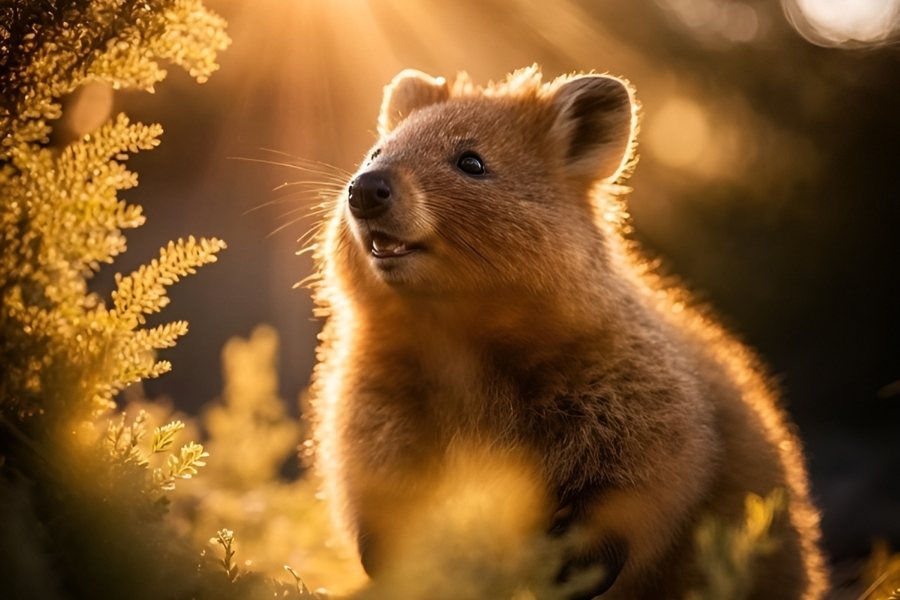
What Is a Quokka, and What Are Its Characteristics?
The quokka is a marsupial in the family Macropodidae, which also includes kangaroos and wallabies. This small animal typically measures between 40 and 54 centimeters in length and weighs between 2.5 and 5.5 kilograms.
Notable physical characteristics of the quokka include its sturdy body and soft coat, which ranges in color from brown to gray. Its large eyes and friendly facial expression are part of what makes it look so happy. It also has rounded ears and a short tail that helps it keep its balance.
- Length: 40-54 cm.
- Weight: 2.5-5.5 kg.
- Coat: brown and gray.
- Large eyes and a friendly expression.
The quokka has a highly developed sense of smell, which allows it to detect food and danger in its surroundings. These characteristics have helped the quokka adapt well to its natural habitat.
Where Do Quokkas Live?
The quokka’s natural habitat is found mainly on Rottnest Island, off the coast of Western Australia. The island is known for its unique landscapes and biodiversity. Quokkas thrive in scrubland and grasslands, where they can find plenty of food and shelter.
In addition to Rottnest Island, small populations can be found in other parts of Australia, including areas along the southwest coast. Quokkas prefer environments that provide shade and shelter, which help them survive in harsh weather conditions.
- Rottnest Island: the quokka’s primary home.
- Scrubland and grassland habitats.
- A preference for shade and shelter.
Their natural environment is vital to their survival, providing both food and protection from predators. However, habitat loss is a major threat to quokka populations.
What Do Quokkas Eat?
The quokka is a herbivore that feeds mainly on leaves, stems, and fruit. Its varied diet provides the nutrients it needs to grow and survive. Quokkas primarily eat low-growing vegetation, which is readily available in their natural habitat.
Some of their preferred foods include:
- Leaves of native plants.
- Fruits such as berries.
- Green, tender stems.
Quokkas are nocturnal animals, which means they forage mainly at night. This not only helps them avoid the heat of the day but also reduces the risk of being spotted by predators.
What Is the Quokka's Behavior Like?
Quokkas have interesting social behavior. They usually live in groups, which provides them with safety and companionship. These groups allow them to establish hierarchies and strengthen bonds among members, which is crucial to their survival.
Quokkas are also known for their curiosity and friendly nature around humans. They often approach people, contributing to their fame on social media and as a tourist attraction. However, visitors should remember to observe them respectfully and not feed them.
- They live in social groups.
- They are curious and sociable around humans.
- They adapt easily to their surroundings.
This behavior makes them unique and endearing, highlighting their importance in popular culture and in conserving their species.
How Do Quokkas Reproduce?
Quokkas reproduce throughout the year, although breeding increases in spring and summer. Females usually give birth to a single joey after a gestation period of approximately 27 to 30 days.
Joeys are born very underdeveloped and grow in their mother's pouch for about six months. During this time, the mother feeds and protects her joey, supporting its growth and development.
- Gestation: 27-30 days.
- Joeys are born underdeveloped and grow in the pouch.
- Joey development: approximately 6 months.
This reproductive system is typical of marsupials and is essential to the species' success in its natural environment.
What Threats Do Quokkas Face, and How Are They Conserved?
Despite their popularity, quokkas face serious threats that put their population at risk. The main threat is habitat loss due to urban development and agriculture.
They are also vulnerable to introduced predators, such as cats and foxes, which significantly affect their numbers. In response, conservation efforts have been implemented to protect their habitat and raise awareness about their situation.
- Habitat loss due to urban development.
- Introduced predators.
- Conservation and education efforts.
The quokka's conservation status is critical, and it is currently classified as a “vulnerable” species. Conservation initiatives include protecting its habitats and running educational programs that promote the importance of its preservation.
Is the Quokka Really the Happiest Animal?
The quokka has been nicknamed the “happiest animal in the world” because of its smiling appearance. However, this claim is more a matter of perception than scientific fact. Its facial expression is due to its facial structure and does not necessarily reflect its emotional state.
Even so, their friendly and curious nature has definitely earned them a special place in many people's hearts. This has contributed to their fame and drawn greater attention to the conservation of the species.
- Famous for its smile.
- More perception than reality.
- Raises interest in conservation.
Their popularity has led to increased tourism to their habitat, which in turn raises awareness of the threats they face.
Frequently Asked Questions About Quokkas
What Are the Characteristics of a Quokka?
Quokkas have a compact build, measuring 40 to 54 cm in length and weighing between 2.5 and 5.5 kg. Their soft fur helps them blend into their habitat. Their friendly-looking faces, framed by large eyes and rounded ears, make them appear to be smiling all the time.
Where Do Quokkas Live?
Quokkas are found mainly on Rottnest Island, off the coast of Western Australia. The island provides suitable habitat with scrubland and grasslands, which are essential for food and shelter. Although their range is limited, populations also live in other parts of Australia.
What Are Some Interesting Facts About Quokkas?
One interesting fact is that quokkas are nocturnal and forage mainly at night. They are also very social and gather in groups. Their popularity on social media is due to how readily they approach people, creating unique photo opportunities.
Where Do Quokkas Come From?
Quokkas are native to Australia and belong to the marsupial family. Their lineage dates back thousands of years, and their ability to adapt to different habitats has been crucial to their survival. Their presence on Rottnest Island has been fundamental to their conservation, making them a symbol of Australia's biodiversity.