The pine processionary caterpillar (Thaumetopea pityocampa) may look harmless at first glance, but it poses a serious danger to pets, especially dogs, and can also affect humans. This forest pest is commonly found in pine forests in Spain and other Mediterranean countries, and is most active from late winter to early spring.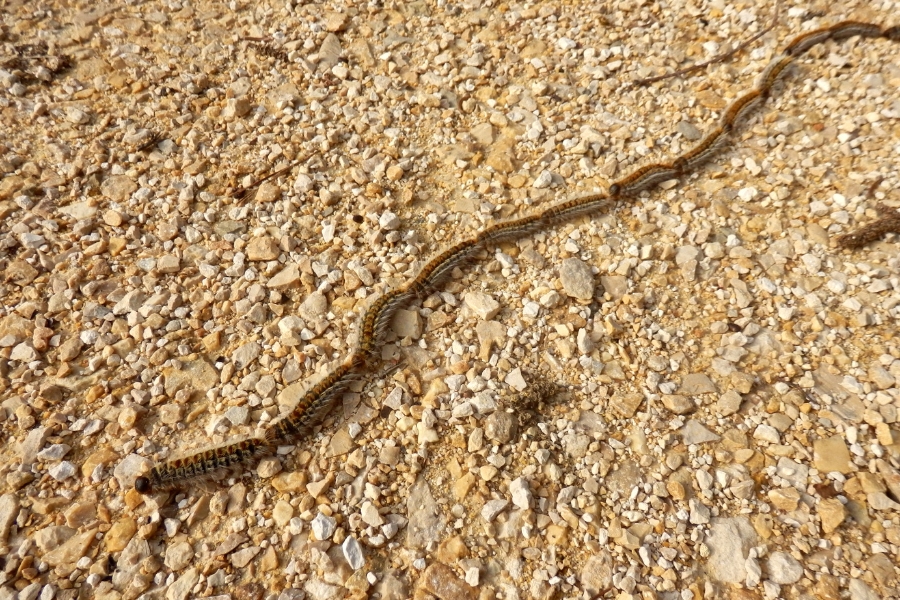
In this article, we explain everything you need to know about this caterpillar: what it is, why it is so dangerous, and how to protect your pets and family.
What Is the Pine Processionary Caterpillar?
The processionary caterpillar is the larva of a moth that lays its eggs in the crowns of pine trees. Small caterpillars hatch from the eggs and feed on the tree’s needles (leaves).
During the colder months, these caterpillars live together in distinctive white silk nests that hang from pine trees. When temperatures begin to rise, usually between January and April, they descend to the ground in single file, forming the famous “procession,” then burrow into the soil to move on to the next stage of their development.
Why Is It Dangerous?
The processionary caterpillar is covered in thousands of irritating hairs that detach easily and contain a highly potent toxin called thaumetopoein. These hairs can cause:
In Pets (Especially Dogs):
Necrosis of the tongue and muzzle if a pet licks or bites the caterpillars.
Severe swelling, drooling, and intense pain.
Difficulty breathing or swallowing.
Tissue loss if not treated promptly.
Death in extreme cases.
In Humans:
Allergic skin reactions (hives, rashes).
Eye problems if the hairs come into contact with the eyes.
Throat irritation from inhaling airborne hairs.
Anaphylactic shock in people with allergies or sensitivities.
Where and When Is It Found?
Pine processionary caterpillars are mainly found in:
Pine forests and scrubland.
Parks and gardens with pine or cedar trees.
They are most active between February and April, although climate change has shifted their life cycle earlier in some regions.
How Can You Avoid Contact?
For Your Pets:
Avoid walking in pine forests during high-risk months.
Keep your dog on a leash at all times in areas where these caterpillars may be present.
Don’t let your dog sniff or play with the caterpillars, their nests, or their remains.
Teach commands such as “No!” or “Leave it!” to prevent contact.
For your home:
If you have pine trees on your property, inspect them during the winter.
Have the nests professionally removed.
You can install pheromone traps or trunk bands to collect the caterpillars.
What should I do if my pet comes into contact with them?
Act quickly, if you see your dog touch or lick a caterpillar, take them to the veterinarian immediately.
Don’t rub the affected area, as this could break the hairs and release more toxin.
Rinse thoroughly with plenty of water without rubbing, if possible, but don’t delay the veterinary visit.
Watch for symptoms: drooling, swelling, a swollen tongue, vomiting, or lethargy are signs of an emergency.
How can pine processionary caterpillars be controlled?
Control measures for this pest should be preventive and environmentally responsible:
Biological control: using natural predators such as birds or bats.
Pheromone traps to capture males before they mate.
Trunk bands to intercept caterpillars as they descend from the tree.
Mechanical removal of nests (by professionals only).
Plant health treatments (using approved products in controlled areas).
In conclusion, pine processionary caterpillars are not only a threat to trees but also a real danger to our pets and people. Learning about them, taking preventive measures, and acting quickly in the event of contact are key to avoiding their most serious effects.
If you live in an area with pine forests or often walk your dog in natural settings, stay alert during high-risk months and contact a veterinarian if you suspect your dog has been exposed.