The Basenji is a breed of African origin known for its elegant appearance, independent nature, and one distinctive trait: unlike most dogs, it rarely barks, instead making sounds similar to singing or yodeling. It is intelligent, active, clean, and affectionate with its family, though it can be reserved around strangers.
In this guide, you'll learn about the Basenji's characteristics, origins, temperament, daily care, potential health problems, approximate price, and what to consider before adopting or buying a puppy.
Basenji at a Glance
- Origin: Central Africa, particularly associated with areas of the Congo.
- Size: small to medium-sized, compact, and athletic.
- Approximate height: males 43 cm and females 40 cm at the shoulder.
- Approximate weight: males 11 kg and females 9,5 kg.
- Temperament: intelligent, independent, alert, affectionate, and curious.
- Coat: short, fine, shiny, and easy to maintain.
- Activity: needs daily exercise and mental stimulation.
- Best suited for: active people who can devote time to training and walks.
Basenji Characteristics
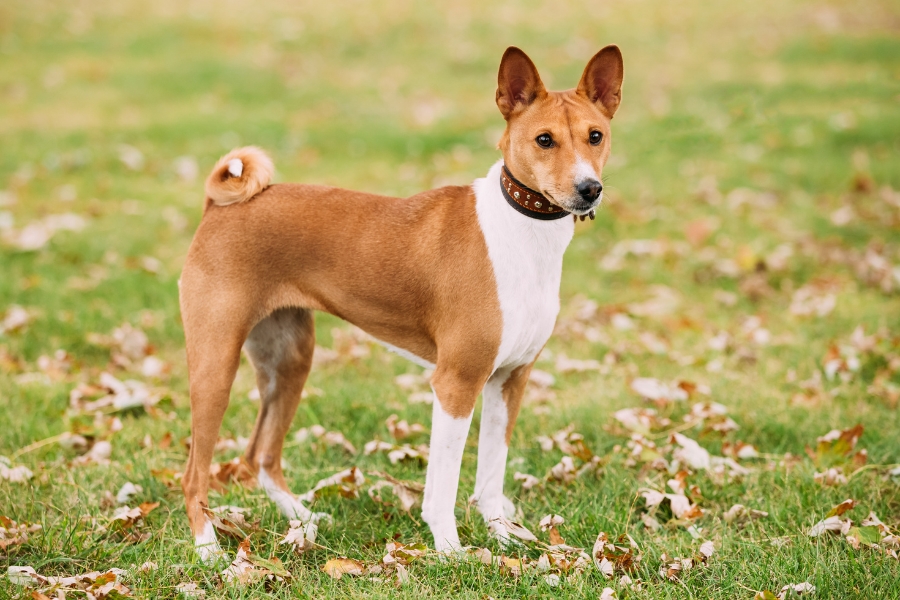
The Basenji's characteristics make this breed highly recognizable. It has a lean, muscular, well-proportioned body, erect ears, a curled tail, and an alert expression. Its appearance is often described as elegant and athletic, with quick, agile movements.
One of the Basenji's best-known traits is that it is considered a barkless dog because it does not bark in the usual way. That does not mean it is mute: it can make other sounds, whines, howls, or a distinctive vocalization known as a yodel.
| Characteristic | Basenji |
|---|---|
| Dog type | Primitive, agile hunting dog |
| Height | Males: about 43 cm / females: about 40 cm |
| Weight | Males: about 11 kg / females: about 9,5 kg |
| Coat | Short, fine, smooth, and shiny |
| Common colors | Red and white, black and white, tricolor, or brindle and white |
| Temperament | Independent, intelligent, curious, affectionate, and reserved with strangers |
| Exercise needs | Moderate to high |
Basenji Origin
The Basenji is one of the oldest dog breeds and has historical ties to Central Africa. For generations, it was used as a hunting dog because of its speed, agility, keen sense of smell, eyesight, and ability to move through difficult terrain.
Its origins explain many of its traits today: it is a hardy, observant dog that is relatively quiet compared with other breeds and has a strong instinct to explore. So, although it can adapt to family life, it needs consistent routines, exercise, and a safe environment.
If you are interested in other breeds with a rich history and distinctive personalities, you can also browse our section on dog breeds or our complete guide to all dog breeds.
Basenji Temperament
The Basenji's temperament is often described as intelligent, independent, affectionate, and alert. It can form a strong bond with its family, but it is not always as obedient or eager to please as breeds that are more dependent on people.
This does not mean the Basenji is inherently a “difficult” dog, but it does need an owner who understands its independence. It learns quickly, although it may become bored if training sessions are repetitive or too long.
Are Basenjis affectionate?
Yes, Basenjis can be very affectionate with their families. However, they tend to show affection more subtly than some other breeds. They may seek company, rest near their caregivers, and enjoy physical contact, but they also value their independence.
Are Basenjis good for first-time owners?
They can be, if the owner does their research beforehand and is prepared to start training during puppyhood. This is not the easiest breed for someone looking for a highly obedient, calm dog that can be off leash in any setting. Because of its prey drive, curiosity, and independence, keeping it leashed in unenclosed areas is advisable.
Basenji Care
Basenji coat care is straightforward, but the breed needs consistent exercise, training, socialization, and preventive veterinary care. Basenjis are clean dogs with short coats and minimal grooming needs, but they require plenty of physical and mental activity.
Daily Exercise
The Basenji needs daily walks, play, and mental stimulation. A quick outing isn’t enough: this is an agile, curious, energetic dog. Ideally, combine walks, sniffing, scent games, positive training, and time off leash in safe, enclosed areas.
- Daily walks on leash.
- Scent and search games.
- Short, varied training sessions.
- Secure, enclosed areas where they can run.
- Interactive toys to prevent boredom.
Nutrition
A Basenji’s diet should be tailored to their age, weight, activity level, and health. Puppies, active adults, and senior dogs have different nutritional needs. Choose a high-quality, complete food and monitor portions to prevent both excess weight and nutritional deficiencies.
To learn more, see our guide to the importance of nutrition for dogs.
Grooming and brushing
The Basenji’s coat is short and easy to maintain. Weekly brushing is usually enough to remove loose hair and keep the skin in good condition. The breed is also known for grooming itself, so many owners compare it to a cat in this regard.
- Brush weekly.
- Bathe only when necessary.
- Check the ears regularly.
- Trim the nails if they don’t wear down naturally.
- Maintain regular dental hygiene.
Training a Basenji requires patience, consistency, and positive reinforcement. They respond better to short sessions, games, and treats than to harsh or repetitive methods. Socialization from puppyhood is essential to help them get used to people, dogs, noises, handling, and different environments.
If you’re bringing home a puppy, you may also find this guide on what to consider when you have a puppy helpful.
Basenji health: common problems
Basenjis are generally hardy dogs, but like any breed, they may be predisposed to certain health problems. Prevention, veterinary checkups, and choosing responsible breeders are key to reducing risks.
Health problems commonly monitored in this breed include:
- Fanconi syndrome: an inherited disorder that can affect kidney function.
- Eye problems: some lines may be predisposed to inherited eye diseases.
- Joint problems: although this isn’t a heavy breed, it’s a good idea to monitor mobility, weight, and exercise.
- Digestive problems or food sensitivities: these can occur in some dogs.
If you notice symptoms such as lethargy, weight loss, excessive thirst, changes in urination, frequent vomiting, limping, or vision loss, consult a veterinarian. This content is for informational purposes and is not a substitute for professional advice.
Is the Basenji a good pet?
The Basenji can be an excellent pet for the right person. They’re clean, elegant, intelligent, relatively quiet, and have a distinctive way of relating to people. However, they may not be the best choice for someone looking for a highly obedient, low-energy dog that can be safely off leash just about anywhere.
A Basenji may be a good fit if…
- You have time for daily walks and play.
- You want a clean, short-haired dog.
- You like intelligent, independent dogs.
- You can train patiently.
- You have a safe environment to prevent escapes.
This may not be the ideal breed if…
- You want a highly obedient dog from day one.
- You can’t provide daily exercise.
- You need to leave the dog alone for many hours every day.
- You want a dog you can always let off leash in open areas.
- You don’t have the patience to work on socialization and training.
Can a Basenji live in an apartment?
Yes, a Basenji can live in an apartment if they get enough exercise, quality walks, and mental stimulation. Their size and tendency to bark less can make them a good fit for city living, but “doesn’t bark much” doesn’t mean “doesn’t need activity.”
A bored Basenji may find ways to entertain themselves, such as chewing on objects, trying to escape, climbing on furniture, or acting restless. The key is to meet their needs rather than expect them to settle down at home without enough activity.
Basenji price in Spain
The price of a Basenji can vary widely depending on the country, breeder, bloodline, health testing, paperwork, and puppy availability. Rather than focusing on price alone, check that the breeder follows responsible practices and provides clear information about health, vaccinations, identification, pedigree if applicable, and pickup arrangements.
You can also look for a Basenji available for adoption or contact breed associations and animal shelters. Although they aren’t always easy to find, adoption can be a responsible option if you find a dog that suits your lifestyle.
Tips before getting a Basenji
- Learn about their independent nature before making a decision.
- Don’t choose one just because they “don’t bark”: Basenjis also vocalize and need training.
- Plan daily walks and mentally stimulating games.
- Use a harness or secure leash in open areas.
- Practice recall, but don't let your dog off leash in unfenced areas unless it's safe to do so.
- Choose breeders or organizations that provide transparent health information.
- Ask your veterinarian about checkups, nutrition, and preventive care.
Frequently Asked Questions About the Basenji
What Are the Basenji's Characteristics?
The Basenji is a small-to-medium-sized, athletic dog with a short coat, erect ears, a curled tail, and an intelligent, independent personality. It is known for being clean, curious, and active, and for making singing-like sounds instead of barking like most dogs.
Why Doesn't the Basenji Bark?
The Basenji generally doesn't bark in the conventional way because of the distinctive nature of its vocalizations. However, it isn't mute: it can yodel, howl, growl, whine, and make other sounds to communicate.
What Is the Basenji's Temperament?
Basenjis are typically intelligent, independent, alert, curious, and affectionate with their families. They may be reserved around strangers and need early socialization, positive training, and consistent routines.
Are Basenjis Easy to Train?
Basenjis are intelligent, but not always traditionally obedient. They learn best with short sessions, positive reinforcement, games, and patience. Excessive repetition or harsh methods tend to be less effective with this breed.
How Much Exercise Does a Basenji Need?
Basenjis need daily exercise and mental stimulation. Ideally, combine walks, scent games, training, and activities in safe areas. If bored, they may develop destructive behaviors or try to escape.
Are Basenjis Good With Children?
Basenjis can live with children if they are well socialized and their boundaries are respected. As with any dog, interactions should be supervised, and children should learn not to bother the dog when it is sleeping, eating, or seeking some quiet time.
Do Basenjis Get Along With Other Dogs?
Basenjis can live with other dogs if properly socialized, although their temperament can vary from one dog to another. Introductions should be gradual and take place in controlled settings.
Do Basenjis Shed a Lot?
Basenjis have short, low-maintenance coats. They can shed, like most dogs, but usually need less brushing than long-haired breeds or breeds with a thick double coat.
How Long Do Basenjis Live?
Basenjis typically live about 13 to 14 years, although lifespan can vary depending on genetics, nutrition, exercise, preventive veterinary care, and quality of life.
Where Can You Adopt a Basenji?
To adopt a Basenji, you can contact shelters, rescue organizations, breed-specific groups, and adoption platforms. Before deciding, consider the dog's temperament and history, and whether it fits your routine.
Conclusion: Is a Basenji the Right Dog for You?
The Basenji is a unique breed: elegant, clean, intelligent, active, and known for its distinctive way of communicating. These traits make it appealing to many families, but the breed also requires commitment, exercise, training, and a safe environment.
If you're looking for an independent, curious, relatively quiet dog with plenty of personality, the Basenji may be a great choice. If you prefer a highly obedient, calm, beginner-friendly breed, you may want to consider other options in our dog breed guides.