The fascinating world of the world's most venomous animals includes creatures that have evolved to produce lethal toxins. These substances not only help them defend themselves against predators but are also useful for hunting prey. From the depths of the ocean to dense jungles, these animals show us the diversity of life on Earth.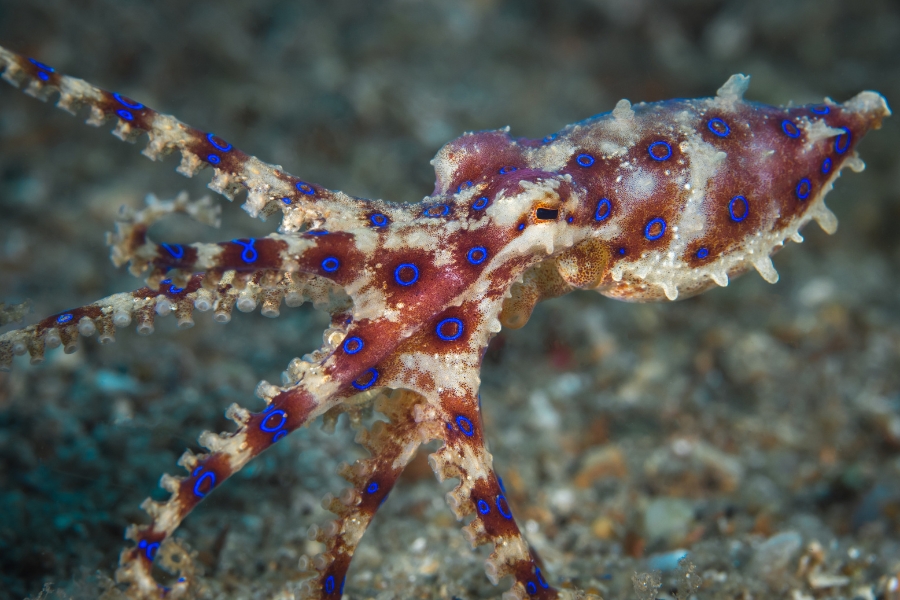
Learning more about these creatures and their venoms is not only biologically interesting but may also have important applications in modern medicine. Next, we'll explore some of the most intriguing and dangerous aspects of these animals.
What Are the 10 Most Venomous Animals in the World?
The world is full of remarkable creatures, and some stand out for their high toxicity. Here's a list of the 10 most venomous animals in the world:
- Box jellyfish
- Inland taipan
- Golden poison dart frog
- Blue-ringed octopus
- Black scorpion
- Blue-lipped sea snake
- Cone snail
- Firefish
- Geographer cone snail
- Glass frog
These most dangerous venomous animals on the planet have toxins that can cause anything from intense pain to death within minutes. The box jellyfish, for example, is famous for its venom, which can kill a human in just a few minutes. The inland taipan, on the other hand, has venom so potent that it is said to be capable of killing 100 people with a single bite.
It's fascinating to see how these creatures have developed defense and hunting mechanisms that include producing highly effective venoms. Many of these species also have unique adaptations that help them survive in their habitats.
What Is the Deadliest Animal in the World?
Although there are many venomous animals, the title of deadliest animal in the world is debated. However, many studies indicate that the box jellyfish is the leading contender. Its venom is considered the most potent of any animal and can cause death in just minutes.
The danger posed by the box jellyfish stems not only from its venom but also from its ability to camouflage itself in the water and its presence at many tropical beaches. This animal does not seek to attack, but accidental contact can be fatal.
The inland taipan, though less well-known, is also a contender in this category. Its venom is extremely potent, and because it is agile and fast, it can be very dangerous if it feels threatened.
What Are the Characteristics of Venomous Animals?
The world's most venomous animals have distinctive characteristics that help them survive in their environment. These include:
- Toxin production: They have glands that produce specific venoms.
- Bright colors: Many are brightly colored, which warns predators of their toxicity.
- Defensive behaviors: Many display threatening postures or use camouflage to avoid being attacked.
- Evolutionary adaptations: They have developed venoms over millions of years as part of their evolution.
These traits not only help them defend themselves but also help them hunt effectively. For example, the golden poison frog uses its venom to paralyze its prey, making it easier to catch.
How Is Venom Used in Nature?
Venom serves several purposes in nature. Its primary function is defense against predators, but it is also used for hunting. For example, the blue-ringed octopus injects venom into its prey, paralyzing it so it can be eaten more easily.
Venom also plays a crucial role in regulating populations of certain species. Animals with lethal venom tend to face less predation, allowing them to reproduce and survive in their habitats.
Another important use of venom is in medicine. Many toxins are being studied for their potential in medical treatments, such as painkillers and treatments for neurological diseases.
Where Do the Most Venomous Animals Live?
The most venomous animals in the world live in a variety of habitats, from oceans to tropical rainforests. For example:
- Box jellyfish: Found in warm, tropical waters, especially in the Indian and Pacific Oceans.
- Inland taipan: Lives in arid and semiarid regions of Australia.
- Golden poison frog: Lives in the rainforests of Central and South America, near freshwater.
- Blue-ringed octopus: Found on coral reefs in the Pacific and Indian Oceans.
Each of these animals has developed unique adaptations to survive in its environment. For example, the golden poison frog lives in a habitat where it can access toxin-rich insects, which it then incorporates into its own venom.
What Is the Deadliest Venom in the World?
The deadliest venom in the world belongs to the box jellyfish. This venom can cause death in less than five minutes after significant contact. It affects the heart and nervous system, leading to rapid paralysis and death.
Other deadly venoms include those of taipan snakes and some scorpions, but none match the speed and effectiveness of box jellyfish venom.
What Are the Effects of Venom on Humans?
The effects of venom from the most venomous animals in the world can vary significantly. Box jellyfish venom, for example, can cause extreme pain and paralysis, and may be fatal without immediate treatment.
The effects of venom also depend on the amount and type of exposure. For example, taipan venom can cause neurological damage and internal bleeding, while blue-ringed octopus venom can cause muscle and respiratory paralysis.
It is crucial to act quickly after a bite or sting from one of these animals. Immediate medical attention can be the difference between life and death in many cases.
Frequently Asked Questions About Venomous Animals
What Are the 10 Most Venomous Animals in the World?
We already listed the 10 most venomous animals in the world, including the box jellyfish, inland taipan, and golden poison frog. Each of these animals has venom that can be lethal to humans and other animals.
What Are the 5 Most Venomous Animals?
The five most venomous animals are the box jellyfish, inland taipan, golden poison frog, blue-ringed octopus, and black ink scorpion. These animals have developed extremely potent venom that helps them survive in their respective habitats.
What Is the Deadliest Animal in the World?
The title of the deadliest animal in the world is often given to the box jellyfish because its highly lethal venom can cause death within minutes. Other contenders, such as the taipan, are also extremely dangerous, but the box jellyfish stands out for how quickly its venom acts.
What Is the Deadliest Venom in the World?
The deadliest venom is attributed to the box jellyfish. Its toxicity is so high that immediate treatment is needed to prevent death. In addition to its venom, the speed with which it affects the cardiovascular and nervous systems makes it even more dangerous.