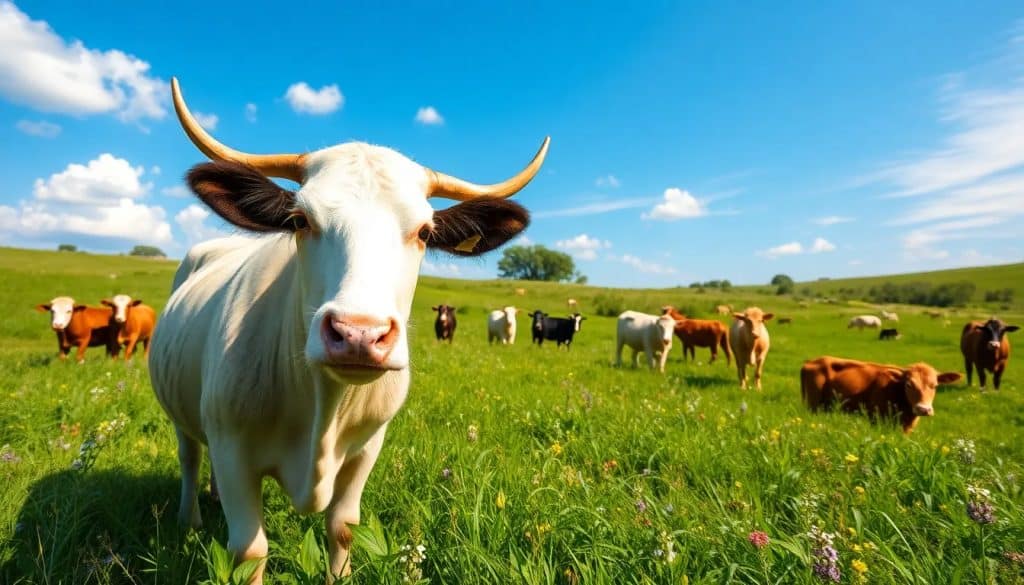
The presence of horns in cows is a fascinating topic that sparks many people's curiosity. The answer to “Do cows have horns?” isn't simple, since it depends on several factors, primarily genetics and management. This article explores why the presence of horns varies in these animals.
Throughout this article, we'll look at different cattle breeds and their relationship to horns, as well as the implications of genetic selection in modern breeding. We'll also explore how cows communicate and the role horns play in that process.
Why Do Some Cows Have Horns While Others Don't?
The main reason some cows have horns while others don't is genetics. Many breeds have been specifically selected to be hornless, a trait known as “polled.” Breeds that commonly have horns include Guernsey and Jersey cattle, while breeds such as Angus are bred to be hornless.
Raising hornless cattle has become popular for several reasons, including reducing injuries to both animals and workers. This has led to a focus on breeding animals that do not develop horns genetically.
In addition, genetic engineering, including techniques such as CRISPR, has begun to play a crucial role in creating hornless cattle. However, this practice also raises ethical questions about animal welfare and genetic diversity.
Do Cows Communicate Through Their Horns?
Horns in cows are not just a physical characteristic; they can also serve as a means of communication. Through their posture and movements, cows can express their emotional and social state to other members of their group.
For example, the way a cow positions its horns can signal aggression or submission. Cows with horns often use them to establish hierarchies within the herd, which is essential to their social organization.
However, it's important to note that hornless cows also develop effective ways to communicate, using other methods such as vocalizations and body language. So, although horns may play a role, they are not the only means of interaction between these animals.
Which Cattle Breeds Have Horns?
Several cattle breeds generally have horns. Some of the best-known include:
- Holstein: Known for their distinctive black-and-white coats, many Holsteins have horns.
- Jersey: These cows, recognized for their excellent milk production, can also have horns.
- Guernsey: Another horned breed, known for its friendly temperament and high-quality milk.
On the other hand, breeds such as Angus and Hereford have been selected to be “polled,” meaning hornless. This trend has been encouraged by producers seeking to minimize risks associated with handling cattle.
Are Hornless Cows More Common?
Today, breeding hornless cows is becoming increasingly common. This is due to several factors, including safer handling and animal welfare. Most cattle producers prefer working with hornless cattle because this reduces the risk of injury during handling and transport.
The Angus breed is a clear example of how genetic selection has led to a predominance of hornless cattle. Most Angus cows are “polled,” which has contributed to the breed's popularity and success in the industry.
Despite this, there is still significant interest in preserving horned breeds, which are valued for their genetic diversity and unique characteristics. Balancing practical management with the preservation of genetic diversity is an ongoing debate in the cattle industry.
What Is the Genetic Significance of Horns in Cows?
The presence or absence of horns in cows is linked to specific genes that control this trait. These genes not only determine whether an animal will have horns, but can also influence other traits important to breeding and cattle management.
Genetic selection has allowed cattle producers to increase the proportion of hornless cows, but this also brings challenges. A loss of genetic diversity can affect animals' resistance to disease and their ability to adapt to different environments.
Organizations such as the Franz Weber Foundation have advocated for preserving horned breeds, arguing that they are part of cattle biodiversity and genetic heritage. This debate highlights the importance of considering both efficient management and the ethics of breeding.
Do Cows Have Horns, or Only Bulls?
A common myth is that only bulls have horns. However, both cows and bulls can have horns. The main difference is that bulls tend to have larger, more prominent horns due to the influence of male hormones.
In some breeds, cattle are specifically bred to be hornless, while in others, both males and females may have horns. This variation depends largely on the breed and on breeders’ decisions about how they want to manage their livestock.
Therefore, the answer to Do cows have horns? is that in many cases, yes, but modern breeding has favored hornless cattle for practical reasons and ease of management.
Related questions about horns in cows
Which has horns, the cow or the bull?
Both cows and bulls can have horns, although bulls tend to have larger, more prominent ones. Whether they have horns depends on the breed and genetic selection. For example, some breeds, such as Angus, are bred to be hornless.
Why don’t cows have horns?
Cows may be hornless for genetic reasons. Breeding hornless cattle has become more common because they are safer to handle. Breeding polled animals has become standard in many breeds, limiting the presence of horns.
Which cows have horns?
Breeds such as Holstein and Guernsey are known for having horns. However, some cattle in these breeds can be bred to be hornless through genetic selection. This highlights the diversity within cattle breeds.
What are hornless cows called?
Cattle that do not have horns are called “polled.” This term describes breeds that have been specifically selected not to develop horns. Examples include Angus and Hereford.