The praying mantis is a fascinating and enigmatic insect that has captured the attention of many with its unique appearance and intriguing behaviors. It's often described in terms of mystery and danger, leaving many people wondering: Is a praying mantis venomous? In this article, we'll explore the biology and characteristics of this intriguing insect, as well as the myths surrounding it.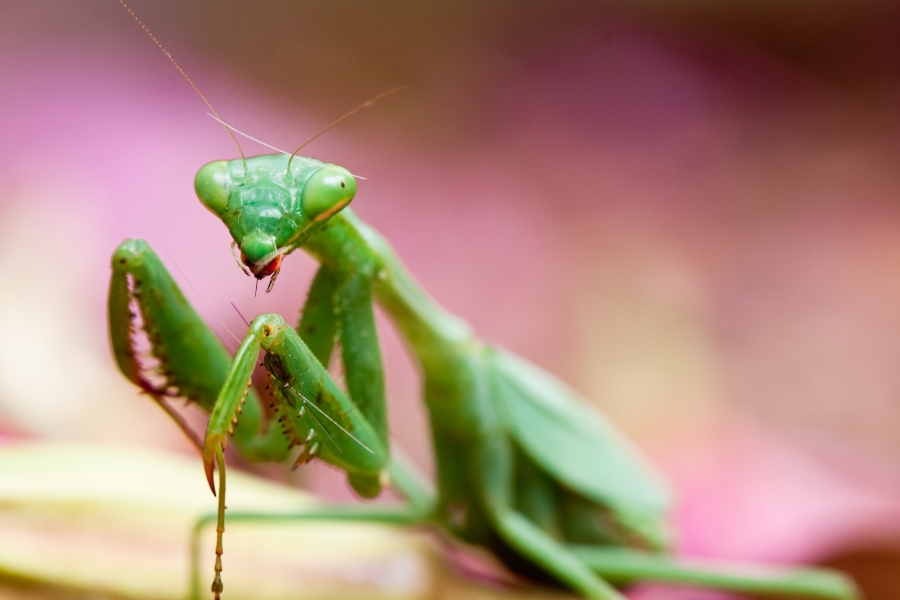
From its role as a predator to its surprising eating habits, the praying mantis offers a glimpse into the fascinating world of zoology and animal behavior. We'll take a closer look at its characteristics and relationship with humans, and, of course, dispel myths about its venom.
What Is a Praying Mantis? Key Characteristics
The praying mantis (Mantis religiosa) is an insect in the order Mantodea. This group includes more than 2,400 different mantis species, each with unique characteristics and adaptations to its environment. The praying mantis's most notable features include its elongated body, compound eyes, and front legs adapted for hunting.
One of the praying mantis's most impressive features is its camouflage. This insect can be different colors, such as green and brown, allowing it to blend seamlessly into its surroundings and making it easier to hunt. Its appearance can also be deceiving: although mantises may seem harmless, they are highly efficient predators.
- Compound eyes: Provide an almost complete view of their surroundings.
- Front legs: Adapted to catch prey quickly.
- Camouflage: Helps it hunt by blending into its surroundings.
Females are generally larger than males and often eat their mates during mating. This behavior is considered an evolutionary adaptation that provides them with essential nutrients for producing eggs.
Is a Praying Mantis Venomous?
When it comes to the question Is a praying mantis venomous?, the answer is somewhat nuanced. Strictly speaking, a praying mantis is not venomous; it does not have venom that can harm humans. However, it's important to note that it can cause injuries if it feels threatened.
Praying mantises have a powerful bite that can be painful, though not dangerous. Their jaws are strong and designed to capture and dismember prey. Even so, they do not have venom that would have a toxic effect on humans.
It's worth noting that although a mantis bite can be uncomfortable, the risk of being bitten is low because mantises tend to avoid contact with humans and only attack when they feel threatened.
What Other Mantis Species Are There?
The genus Mantis includes a variety of species, each with distinctive characteristics. Some of the best-known include the common praying mantis, the brown mantis, and the white mantis. These species vary not only in color but also in their habits and habitats.
The brown mantis, for example, is known for its ability to camouflage itself among dry vegetation, while the white mantis has a more unusual appearance that makes it stand out. Both species play an important role in controlling pests in their environments.
- Common praying mantis: The best-known and most widely studied.
- Brown mantis: Excellent camouflage in dry environments.
- White mantis: Less common, but just as interesting.
In addition to these, many other species vary in size, color, and behavior, reflecting the diversity of the order Mantodea.
Does a Praying Mantis Sting or Bite?
A praying mantis does not sting, but it may bite if it feels threatened. Its jaws are strong and designed to capture and crush prey, so a bite can be painful for humans. This behavior often occurs during unexpected encounters or when someone tries to handle a mantis.
It's important to note that a praying mantis bite is not dangerous. Although it may cause discomfort, there are no reports of serious allergic reactions or significant side effects after a bite.
To avoid any interaction, it's best to observe a praying mantis from a safe distance and respect its space. This protects not only people but also the insects themselves, which prefer to avoid contact.
Why Are Praying Mantises Cannibalistic?
Cannibalism in praying mantises is a behavior that has intrigued scientists and nature enthusiasts. This phenomenon occurs most often after mating, when the female may eat the male. This behavior is considered a survival strategy.
Cannibalism occurs because eating her mate provides the female with additional nutrients that are crucial for egg production. This act may seem brutal, but it is an evolutionary adaptation that helps the species persist.
Cannibalism may also be seen as a form of competition among males, in which the strongest may have more opportunities to reproduce. In this sense, cannibalism is part of a survival strategy in a world where resources are limited.
Can a Praying Mantis Be Dangerous to Humans?
Despite its intimidating appearance and predatory behavior, the praying mantis poses no significant danger to humans. Its size and strength are relatively small compared with those of other predators, limiting its ability to cause harm.
As mentioned earlier, its bite can be painful, but it is not venomous and does not pose a risk to human health. In addition, its defensive behavior usually leads it to avoid contact with people.
In the ecosystem, praying mantises play a beneficial role by helping control pest insect populations. Therefore, their presence can be considered more of an advantage than a risk.
Frequently Asked Questions About Praying Mantises
What Happens If a Praying Mantis Bites You?
If a praying mantis bites you, it will feel similar to an insect bite and may cause a little pain or discomfort. However, it is not dangerous to humans and usually does not require medical attention. Most of the time, the pain goes away quickly, and there are no lasting effects.
What Do Praying Mantises Do to Humans?
Praying mantises are not aggressive toward humans. Their usual reaction is to flee or hide to avoid contact. If they feel threatened, they may bite, but this is a defensive response, not an attack.
How Dangerous Are Praying Mantises?
Praying mantises are rarely dangerous to humans. Although they can deliver a painful bite, they are not naturally aggressive and prefer to avoid contact. Their role in the ecosystem is more beneficial than threatening.
What Happens If You Touch a Praying Mantis?
If you touch a praying mantis, it will most likely feel uncomfortable and try to move away. If it feels threatened, it may try to bite. It is best to observe them from a safe distance to avoid any aggressive behavior.
To add some visual interest, here is an interesting video that shows a little more about the world of praying mantises.