The Brussels Griffon is a toy dog breed that is not only adorable but also an exceptional companion. Originally from Brussels, Belgium, this small dog has won the hearts of many families with its affectionate nature and adaptability.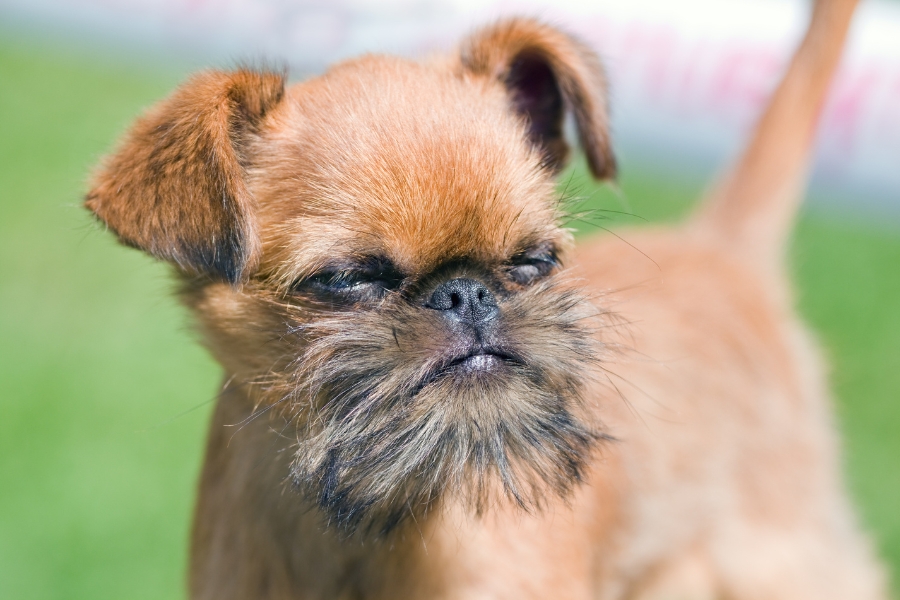
In this article, we’ll take an in-depth look at the Brussels Griffon’s traits, care needs, and behavior, along with useful information for anyone considering adopting one of these charming dogs.
What Are the Characteristics of the Brussels Griffon?
The Brussels Griffon stands out for its unique appearance and endearing personality. It has a large, round head and a flat face that give it a distinctive look. Its large, expressive eyes and broad nose add to its unmistakable charm.
In terms of size, the Brussels Griffon is a toy dog, weighing between 3 and 6 kg and standing 20 to 28 cm tall. Its coat can be rough or smooth, although the rough-coated variety is more popular. This coat requires specific care to keep it shiny and soft.
Some of the breed’s most notable personality traits are its affectionate and playful nature. Brussels Griffons are highly sociable dogs that enjoy human company and can get along with other animals if properly socialized from an early age.
How Much Does a Brussels Griffon Cost in Spain?
The price of a Brussels Griffon in Spain can vary considerably depending on the breeder and the dog’s quality. A puppy generally costs between 800 and 1500 euros. It’s important to do your research and make sure the breeder is responsible and has good references.
Factors that can affect the price include the dog’s bloodline and pedigree, and whether it has been vaccinated and dewormed before sale. Prices may also be higher during periods of high demand, such as the holidays.
Remember that in addition to the initial price, you’ll also need to consider the costs of caring for the dog, including food, veterinary care, and other necessities.
How to Find a Brussels Griffon Breeder in Spain
Finding a Brussels Griffon breeder in Spain can be straightforward if you follow a few key steps. Here are some recommendations to help with your search:
- Research online: Look for breeders in your area and check their websites to learn about their reputation and the quality of their dogs.
- Check social media: Breeders often share information and photos of their dogs on platforms like Instagram and Facebook.
- Ask for references: Talk to other Brussels Griffon owners or check forums and online groups for recommendations.
- Visit the kennel: If possible, visit the breeder to see the conditions in which the dogs are raised and meet the puppy’s parents.
Make sure the breeder prioritizes the health and welfare of their animals by providing a clean, enriching environment.
What Care Does a Brussels Griffon Need?
Caring for a Brussels Griffon is essential to keeping it healthy and happy. These dogs need special attention in several areas:
Balanced diet: Providing a suitable diet is essential. Make sure to offer high-quality food that meets your dog’s size and activity level.
Regular exercise: Although they’re small, Brussels Griffons need daily exercise to maintain a healthy weight and prevent behavioral problems. Short walks and playtime at home are ideal.
Coat care: The Brussels Griffon’s coat needs regular brushing, especially if it is rough. This helps prevent tangles and keep the coat in good condition.
Veterinary care: Regular veterinary visits are key to catching health problems early. Make sure your dog is vaccinated and free of parasites.
What Is the Difference Between the Belgian Griffon and the Brussels Griffon?
There are notable differences between the Belgian Griffon and the Brussels Griffon, although the two breeds share some similarities. Here are some of their distinguishing characteristics:
- Coat type: The main difference is their coat type. The Brussels Griffon has a rough coat, while the Belgian Griffon has a smooth, short coat.
- Appearance: Although both are small dogs, the Brussels Griffon tends to have a flatter face and a sturdier build.
- Temperament: Both are affectionate, but the Belgian Griffon may be a little more energetic and playful than its Brussels counterpart.
It's important to keep these differences in mind when considering adopting one of these dogs, as their personalities and needs may vary.
Is adopting a Brussels Griffon a good idea?
Adopting a Brussels Griffon can be a wonderful choice for many families. These dogs make ideal companion dogs, especially for those looking for an affectionate, loyal companion.
Their compact size also makes them well suited to apartment living and small spaces. However, it's essential to ensure they are well socialized and receive the training they need to prevent behavioral problems.
Before adopting, learn about the breed's specific needs and consider whether you can commit to providing the care and attention they require.
Frequently asked questions about the Brussels Griffon
What is the Brussels Griffon's temperament like?
The Brussels Griffon's temperament is one of its most appealing qualities. These dogs are known for being affectionate and loyal and enjoy human companionship. They often form strong bonds with their owners and can be somewhat protective. However, they're also playful and enjoy interacting with other dogs and people. Their curious nature makes them alert and attentive to their surroundings.
What's the difference between a Belgian Griffon and a Brussels Griffon?
The main differences between the Belgian Griffon and the Brussels Griffon are their coats and appearance. The Belgian Griffon has a smooth coat, while the Brussels Griffon has a rough coat. The Brussels Griffon also tends to have a flatter face and a sturdier build. Both are affectionate dogs, but they may differ in temperament and energy level.
What breed is the dog in As Good as It Gets?
There isn't one definitive answer to this question, as every dog has its own personality and charm. However, many consider the Brussels Griffon an excellent choice because of its affectionate nature and ability to adapt to different environments. These dogs are especially well suited to families with children and people looking for a close companion.
How long do Brussels Griffons live?
A Brussels Griffon typically has a lifespan of 12 to 15 years. However, as with any breed, quality of life and proper veterinary care can affect longevity. A healthy diet and regular exercise are key to helping your Brussels Griffon live a long, healthy life.