Dragonflies and damselflies are fascinating insects that belong to the order Odonata. Although they are often confused, they have unique characteristics that set them apart. In this article, we’ll explore the differences between dragonflies and damselflies in terms of morphology, behavior, and ecology.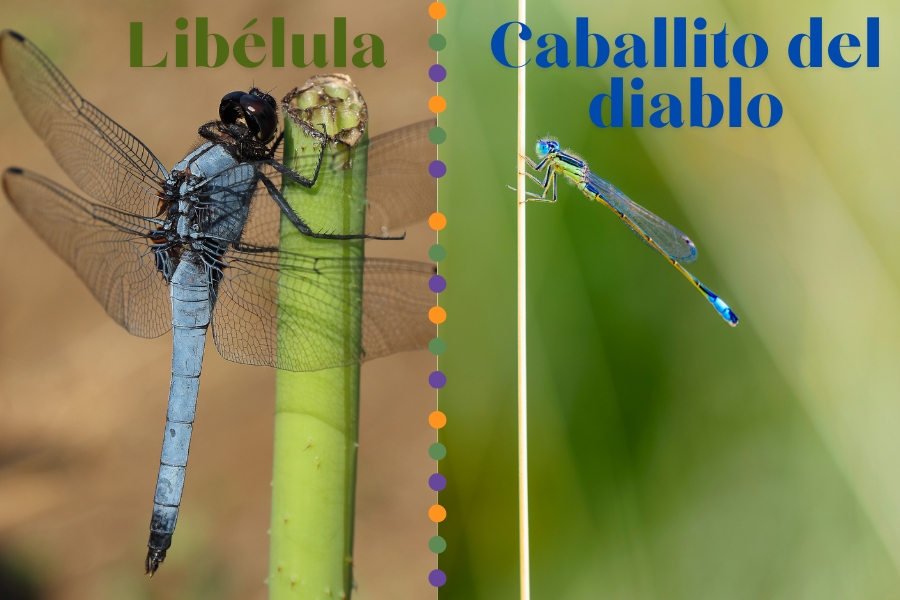
Differences Between Dragonflies and Damselflies
The differences between dragonflies and damselflies are significant and can be observed in several ways. First, dragonflies belong to the suborder Anisoptera, while damselflies belong to the suborder Zygoptera. This taxonomic classification highlights differences in their morphology and behavior.
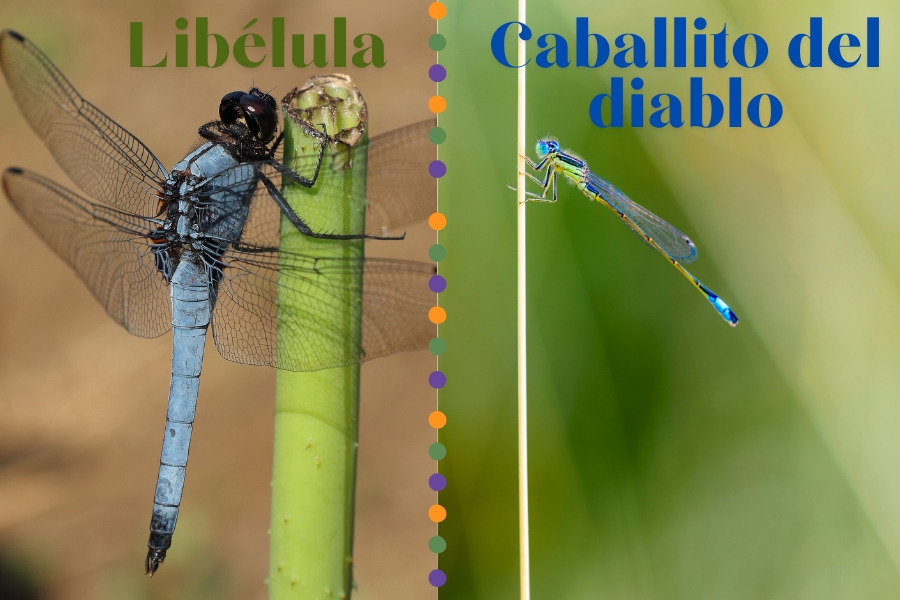
Dragonflies are generally larger than damselflies, with robust bodies and broader, more extended wings. Damselflies, on the other hand, have slimmer bodies and more delicate wings that are usually folded over the body when they perch.
Their habitat is another factor to consider. While dragonflies prefer moving water, such as rivers and streams, damselflies are more commonly found in ponds and still water. These habitat differences influence their behavior and how they interact with their surroundings.
What Is the Difference Between a Dragonfly and a Damselfly?
The main difference between dragonflies and damselflies lies in their physical structure and behavior. Dragonflies have large, widely spaced eyes, which give them a broader field of vision. In contrast, damselflies have eyes that are closer together and sometimes less prominent.
When it comes to flight, dragonflies are highly active hunters capable of making agile maneuvers in the air. Damselflies, by contrast, have a calmer, more graceful flight, reflecting their more sedentary lifestyle.
Both insects feed on other insects, but dragonflies are more effective hunters. Their speed and flying skills allow them to catch prey with ease.
Physical Characteristics of Dragonflies and Damselflies
Morphological characteristics are essential for identifying and distinguishing these two groups. Dragonflies have more robust bodies, with large heads and compound eyes that can cover almost the entire head. Their wings are also broader, allowing them to fly quickly and nimbly.
Damselflies, on the other hand, have slimmer, elongated bodies and longer, narrower wings. Their wings are often held vertically when they are at rest, giving them a distinctive appearance.
- Dragonflies: Robust bodies, broad wings, large, widely spaced eyes.
- Damselflies: Slender bodies, narrow wings, eyes close together.
These morphological differences are not only interesting but also affect their behavior and habitat.
Feeding Habits and Behavior of Dragonflies and Damselflies
The feeding habits of dragonflies and damselflies reflect their adaptations to different habitats and lifestyles. Both are predators, but their hunting and feeding methods vary.
Dragonflies are active hunters that pursue prey in the air, using their speed and agility. Their diet includes mosquitoes, flies, and other flying insects, which they catch in flight. They can also consume larger prey than damselflies.
Damselflies, in contrast, use a different strategy. They feed mainly on insects that come close to the water’s surface. They use their more subtle flight to catch prey such as small aquatic insects and spiders.
- Dragonflies: Active hunters that eat flying insects.
- Damselflies: Passive hunters that feed on aquatic insects.
Their mating behavior also differs considerably. Dragonflies perform complex courtship flights, while damselflies often perform a subtler courtship dance, highlighting the variety of behaviors in the order Odonata.
Reproduction and Life Cycle of Odonates
The reproduction and life cycle of dragonflies and damselflies are fascinating and feature some interesting differences. Both go through several developmental stages, beginning as eggs, then larvae, and finally adults.
Dragonflies lay their eggs in flowing water, where the larvae develop for several months or even years. These aquatic larvae have elongated bodies and jaws that allow them to hunt.
Damselflies, on the other hand, lay their eggs in still water, and their larvae develop in a similar way. However, these larvae are usually smaller and less aggressive than dragonfly larvae.
The life cycle of both insects includes metamorphosis, during which the larvae emerge as adults after a variable period of time. During this stage, each group must adapt to its environment to survive.
The Ecological Importance of Dragonflies and Damselflies
Dragonflies and damselflies play a crucial role in their aquatic ecosystems. As predators, they help regulate insect populations, contributing to ecological balance. Their presence indicates a healthy, balanced environment.
Dragonflies, in particular, are highly effective at hunting mosquitoes, benefiting humans by reducing their numbers. Their life cycle is also interconnected with that of other aquatic organisms, such as fish and amphibians, influencing the food chain.
Damselflies also help control pests, although their impact is more pronounced in still-water environments. Their ecological importance lies in their adaptation to these habitats, where they help maintain balance among different trophic levels.
Fun Facts About Damselflies
Damselflies have several traits that make them even more interesting. For example, they are known for their distinctive flight, which resembles a little horse in motion. This ability lets them move nimbly and gracefully through vegetation.
Their English name, “damselfly,” also refers to their more delicate appearance compared with dragonflies. They are often found in pairs during mating season, putting on a fascinating display for observers.
In popular culture, damselflies have symbolized transformation and adaptability, reflecting their ability to survive in different habitats and conditions.
Related Questions About the Differences Between Dragonflies and Damselflies
What Are the Differences Between Dragonflies and Damselflies?
The main differences between dragonflies and damselflies involve their morphology and behavior. Dragonflies are larger, with robust bodies and broad wings, while damselflies have slender bodies and narrow wings. Dragonflies also hunt actively, whereas damselflies are more passive feeders.
What Is the Difference Between a Dragonfly and a Damselfly?
The difference between a dragonfly and a damselfly lies in their taxonomic classification, morphology, and hunting habits. Dragonflies belong to the suborder Anisoptera, while damselflies belong to the suborder Zygoptera. Their hunting behavior and habitats also differ.
What Is the Difference Between a Dragonfly and a “Alguacil”?
Confusion between a dragonfly and an “alguacil” may arise because they share similar characteristics. However, “alguacil” often refers to a type of dragonfly, so there is no clear difference: both belong to the same order, Odonata.
Is a Dragonfly a “Caballete” or a “Caballito de San Pedro”?
A dragonfly is neither a “caballete” nor a “caballito de San Pedro.” These terms are often used colloquially to refer to different types of insects, but scientifically, dragonflies belong to the order Odonata and the suborder Anisoptera, while damselflies belong to the suborder Zygoptera.