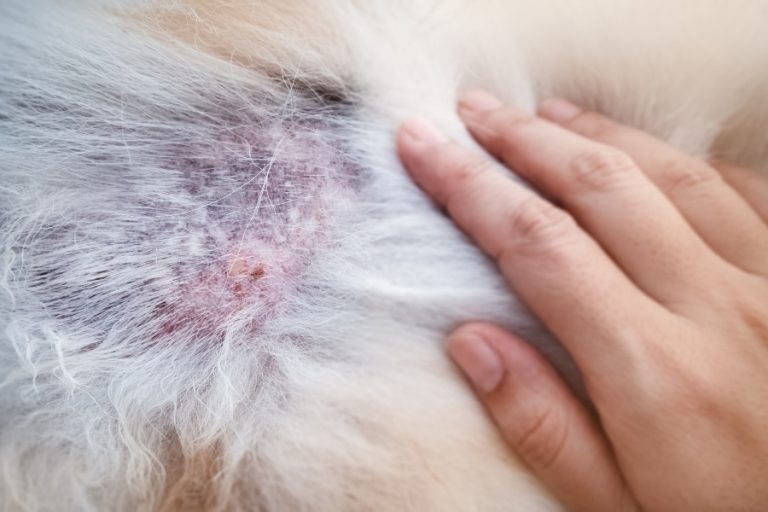
Dermatitis in dogs is a common skin condition that can cause significant discomfort. This condition takes various forms and can be caused by many factors, from allergies to fungal infections. Knowing the types, symptoms, and treatments is essential for protecting your pet’s health and well-being.
In this article, we’ll take an in-depth look at dog dermatitis, including its types, symptoms, and treatment, so you can identify and address the problem appropriately.

What are the types of dermatitis in dogs?
Dermatitis in dogs can be classified into several categories, each with its own characteristics and causes. Here are the most common types:
- Atopic dermatitis: This is an allergic reaction triggered by exposure to environmental allergens. Dogs with this condition often experience intense itching and redness.s30:[{
- Contact dermatitis: This occurs when a dog’s skin comes into direct contact with irritating substances, such as chemicals or certain plants.s31:[{
- Seborrheic dermatitis: This is characterized by excess oil production in the skin, which can cause scaling and an unpleasant odor. This condition is often associated with hormonal problems.s32:[{
- Fungal dermatitis: This is caused by fungal infections, such as ringworm, which can cause itching and hair loss in affected areas.s33:[{
- Allergic dermatitis: This results from immune reactions to allergens, such as fleas or food, and can cause skin lesions and severe itching.s34:s34:Knowing about these types of dermatitis in dogs is essential for choosing the right treatment and improving your pet’s quality of life.s35:[{
Knowing about these types of dermatitis in dogs is essential for choosing the right treatment and improving your pet’s quality of life.
What are the symptoms of dermatitis in dogs?
The symptoms of dermatitis in dogs can vary depending on the type and severity of the condition. Some of the most common symptoms include:
- Intense itching: This is one of the most characteristic symptoms and can cause a dog to scratch or bite at its skin.s38:[{
- Redness: The affected skin may become red and sensitive to the touch.s39:[{
- Hair loss: This can occur in specific areas or more generally, depending on the severity of the dermatitis.s40:[{
- Crusting and scaling: The skin may develop crusts or scales, which can indicate a possible secondary infection.s41:[{
- Unpleasant odor: In some cases, infections or oil buildup can cause an unpleasant smell.s42:
It’s important to watch for these symptoms, as they can significantly affect your dog’s well-being.
How is dermatitis in dogs diagnosed?
Dermatitis in dogs must be diagnosed by a veterinarian, who will carefully assess the animal’s condition. The process generally involves the following steps:
First, the veterinarian will review the dog’s medical history and perform a thorough physical examination. This includes checking the skin for signs of irritation, redness, or infection.
Additional tests, such as blood work or skin scrapings, may also be performed to determine the underlying cause of the dermatitis. These tests are essential for distinguishing between different types of dermatitis and choosing the right treatment.
It’s important to remember that an accurate diagnosis is crucial to prevent the condition from getting worse and ensure your pet receives the most effective treatment.
What are the most effective treatments for dermatitis in dogs?
Treatments for dermatitis in dogs vary depending on the type and cause of the condition. Some of the most effective treatments include:
- Flea medications: If dermatitis is caused by fleas, using flea treatments is essential.
- Corticosteroids: These medications help reduce inflammation and itching, providing immediate relief for the dog.
- Antibiotics: In cases of secondary infections, veterinarians may prescribe antibiotics to fight the bacteria present.
- Dietary changes: In some cases, it may be necessary to change the dog's diet to avoid food allergens.
- Medicated shampoos: Specially formulated shampoos can help clean and soothe irritated skin.
It is essential to follow the veterinarian's instructions to ensure that the treatment is effective and safe.
Can You Treat Dermatitis in Dogs at Home?
Although there are some home remedies for dermatitis in dogs, it's essential to be cautious and always consult a veterinarian before trying any treatment. Some home remedies include:
- Oatmeal baths: An oatmeal bath may help soothe irritated skin and relieve itching.
- Applying coconut oil: This oil has antibacterial properties and may help moisturize the skin.
- Cold compresses: Applying cold compresses to the affected areas may reduce inflammation and discomfort.
However, it's important to remember that these treatments are not a substitute for veterinary care and are not always effective for every condition. A veterinarian can offer the best recommendations based on your dog's specific situation.
What Are the Most Common Causes of Dermatitis in Dogs?
Dermatitis can be caused by a variety of factors, and knowing what they are is crucial to preventing it. Some of the most common causes include:
- Allergies: Environmental, food, or contact allergies are common causes of dermatitis in dogs.
- Flea infestation: Flea bites can cause allergic dermatitis, especially in sensitive dogs.
- Fungal infections: Fungal infections can trigger dermatitis, causing redness and itching.
- Genetic factors: Some breeds are more prone to developing dermatitis due to genetic predisposition.
- Stress: Stress can weaken the immune system and contribute to dermatitis.
Identifying the underlying cause of dermatitis is essential for choosing the right treatment and preventing future episodes.
Frequently Asked Questions About Dog Skin Care
How Can I Tell What Type of Dermatitis My Dog Has?
To determine what type of dermatitis your dog has, it’s essential to take them to the veterinarian. The vet will perform a thorough physical examination and may request additional tests, such as blood work or skin scrapings. Each type of dermatitis has specific symptoms, but only a veterinarian can provide an accurate diagnosis.
What Does Dermatitis Look Like on a Dog’s Skin?
Dermatitis in dogs can appear in various ways. The most common symptoms include redness, itching, hair loss, and scabs. The skin may also look inflamed and sensitive. In some cases, dogs may develop scaly or discolored patches, depending on the severity of the condition.
How Is Dermatitis in Dogs Treated?
Treatment for dermatitis in dogs depends on the type and cause of the condition. It may include medication, dietary changes, or special shampoos. It’s crucial to follow your veterinarian’s recommendations to ensure your pet receives the right treatment and recovers as quickly as possible.
What Does a Dog With Atopic Dermatitis Look Like?
A dog with atopic dermatitis may have intense itching and redness in the affected areas and may frequently scratch or bite at their skin. Hair loss in specific areas is also common, as are scabs or scaling. This type of dermatitis often affects areas such as the ears, paws, and abdomen.