When caring for newborn pigeons, it’s crucial to provide a warm, safe environment. In their earliest stages of life, these birds depend entirely on human care to survive and thrive. Proper feeding and essential care are vital to their development.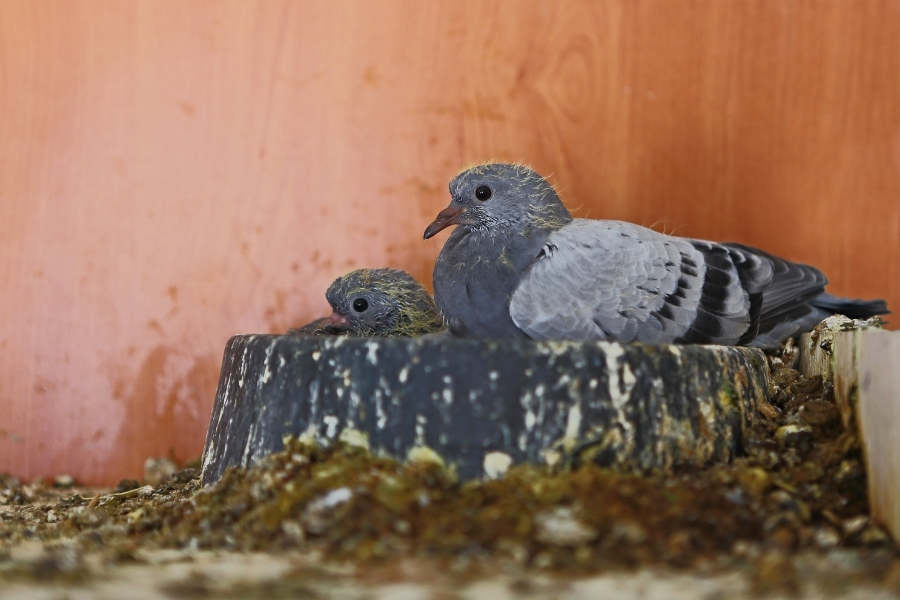
If you find a baby pigeon, it’s important to act quickly. In this article, we’ll explore the most important aspects of caring for and feeding newborn pigeons to help ensure their well-being.
What should you do if you find a baby pigeon?
Finding a baby pigeon can be unexpected. The first thing you should do is assess the situation. If the baby is on the ground, it’s best to try to return it to its nest if it’s safe to do so. If you can’t find the nest, seek help from a specialized wildlife rescue center.
It’s important to remember that baby birds are often fed by their parents and shouldn’t be hand-fed unless absolutely necessary. If you decide to care for it, be sure to keep it in a warm, safe place away from drafts.
Also, it’s a good idea to monitor the squab’s condition. If it seems weak or ill, consulting a veterinarian who specializes in birds may be the best option. Early intervention can save its life.
What Should You Feed a Baby Pigeon?
A proper diet is crucial to the development of young pigeons. A squab needs a diet that mimics the crop milk it would receive from its mother. You can choose from:
- Parrot formula, which is easy to digest and nutritious.
- Commercial food specifically formulated for squabs, containing the necessary nutrients.
- Moistened cat kibble, if needed.
It’s important to feed the squab gradually and in small amounts. To prevent digestive problems, make sure not to overfeed it. Always remember to keep it hydrated adequately, as dehydration can be fatal.
Keep in mind that feeding should be continuous during the first few weeks of life, since squabs need a steady supply of nutrients to grow healthy and strong.
How Can You Provide a Safe Home for a Baby Pigeon?
Housing is essential to a squab’s well-being. It needs a warm, safe space with adequate ventilation. You can use a cardboard box or a suitably sized cage. Here are some tips:
- Make sure the enclosure has a soft lining, such as paper towels or fabric, so the squab is comfortable.
- Place the enclosure in a quiet spot, away from drafts and loud noises.
- Provide a heat source, such as a heat lamp, to maintain the right temperature.
The space must be safe and free of hazards, such as other animals. Young pigeons are vulnerable and need a protected environment to develop properly.
What Are the First Steps in Caring for a Baby Pigeon?
Caring for a baby pigeon involves several important steps. First, make sure it is well-fed and comfortable. Here is a summary of the first steps:
- Assess its condition: Observe whether it is active and alert.
- Provide warmth: Keep its housing at an appropriate temperature.
- Offer suitable food: Use soft food or moistened pellets.
- Consult a veterinarian if you notice signs of illness.
Remember that patience and attention are essential at this stage. Baby pigeons need time to adjust to their new surroundings and receive the care they need.
What Should You Do If You Find a Baby Pigeon That Has Fallen From Its Nest?
If you find a baby pigeon that has fallen from its nest, the first thing to do is check whether it is viable. If it is injured, contact a veterinarian or a wildlife rescue center. If the baby pigeon has no visible injuries, you can try to return it to its nest.
If you can't, be sure to:
- Place the baby pigeon in a safe place, such as a box, while you decide what to do.
- Provide warmth and food right away.
- Avoid direct contact with other birds or animals.
The right intervention can be key to its recovery. Stay calm and act quickly.
What Are the Right Techniques for Feeding Baby Pigeons?
Feeding a baby pigeon requires specific techniques to ensure it gets the proper nutrition. A syringe or feeding tube is preferable to make sure the food reaches its crop.
To feed a squab:
- Prepare the formula according to the manufacturer's instructions.
- Fill the syringe or tube with the mixture.
- Gently place the tip in its beak and let it swallow. Never force-feed it.
Remember that feeding should be gradual and controlled. Watching for any signs of distress during feeding is crucial to avoid digestive problems.
Related Questions About Caring for and Feeding Newborn Pigeons
What Do You Feed a Newborn Pigeon?
Proper nutrition is essential for a newborn pigeon's growth. It should be given an appropriate diet, which may include parrot formula or food made specifically for young birds. The food should be nutritious and easy to digest. You should also always keep it hydrated with fresh water.
How Do You Care for a Newborn Pigeon?
Caring for a newborn pigeon involves several considerations. First, provide a safe, warm place to stay. It's also important to monitor its behavior and feeding, making sure it gets the nutrients it needs. Consult a veterinarian if you notice any signs of illness or weakness.
What Should I Do If I Find a Baby Pigeon?
If you find a baby pigeon, assess its condition. Try to return it to its nest. If that's not possible, seek help from a wildlife rescue center. Keep the bird in a warm, safe place, and make sure it has appropriate food while you decide what to do next.
How Can I Feed a Newborn Baby Bird?
To feed a newborn baby bird, use a syringe or feeding tube. Prepare an appropriate mixture and make sure the bird can swallow it without difficulty. It's essential not to force-feed it and to watch for any signs of discomfort during feeding. Patience is key throughout the process.