Caring for your pet’s ears is an essential part of their overall well-being. For both dogs and cats, proper hygiene and regular checks can help prevent problems ranging from infections to more serious complications. Below is a detailed guide to caring for dogs’ and cats’ ears separately.
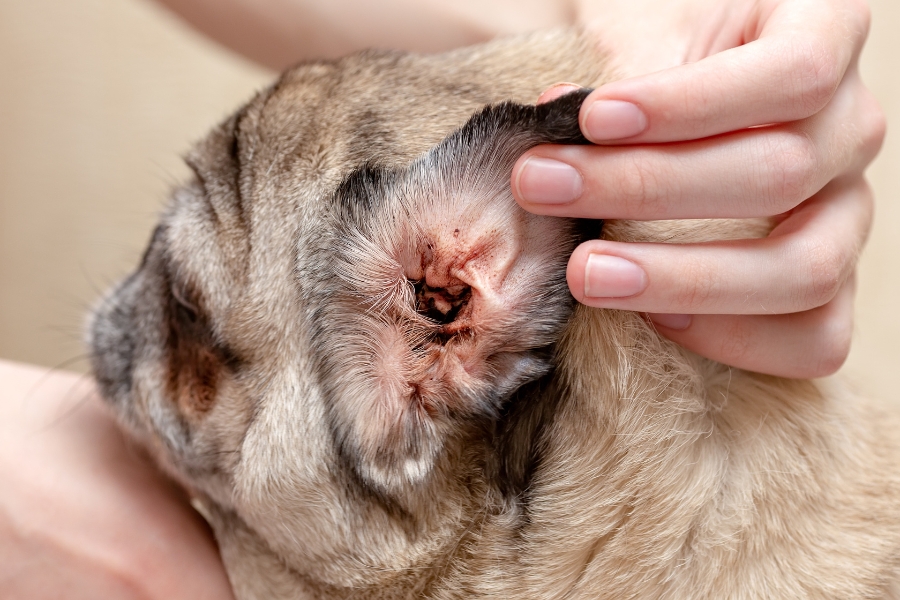
Ear Care for Dogs
Regular checks: Start your care routine with regular checks, at least once a week. This is especially important for breeds with floppy ears or narrow ear canals, such as Basset Hounds and Cocker Spaniels. Look for signs of redness, a bad smell, excess wax, or unusual discharge.
Cleaning: Use a cleaning solution made specifically for dogs’ ears. Apply a few drops inside the ear canal and gently massage the base of the ear to help distribute the solution. Let your dog shake their head, then gently wipe away excess wax and dirt with a cotton ball. Never use cotton swabs, as they can push dirt farther in or damage the inner ear.
Preventing infections: Keeping the ears clean and dry is essential for preventing infections. Dogs that swim frequently need extra care to ensure their ears are dry after each swim, since moisture can encourage bacterial and yeast growth.
Ear Care for Cats
Checking and cleaning: As with dogs, check your cat’s ears regularly for wax buildup, dirt, or any signs of infection. Cats are usually quite good at keeping their ears clean, so they generally need less intervention. However, occasional cleaning may be necessary, especially for large-eared cats such as the Maine Coon.
Dealing with ear mites: Ear mites are common in cats and can cause severe irritation and complications if left untreated. If you notice your cat scratching their ears excessively or shaking their head, consult a veterinarian. Treatment usually includes prescription drops that kill the mites and relieve inflammation.
Veterinary care: If you notice any abnormalities or changes in your pet’s behavior related to their ears, such as avoiding having their head touched, it’s essential to consult a veterinarian. Untreated ear problems can worsen quickly and cause severe pain or hearing loss.
General Tips
- Never insert anything deep into your pet’s ear canal; this can cause injury.
- Avoid using water or unapproved solutions to clean the ears.
- Watch your pet’s behavior for early signs of discomfort or infection.
Regular ear care not only helps keep your pet comfortable and happy, but can also prevent health problems that may require more complex and costly treatment in the future.