The Peruvian guinea pig, also known as the Peruvian Satin guinea pig, is one of the most popular breeds among guinea pig enthusiasts. Its distinctive long coat and sociable nature make it an ideal pet for many families. In this article, we’ll take a closer look at its characteristics, care, and specific needs to ensure its well-being.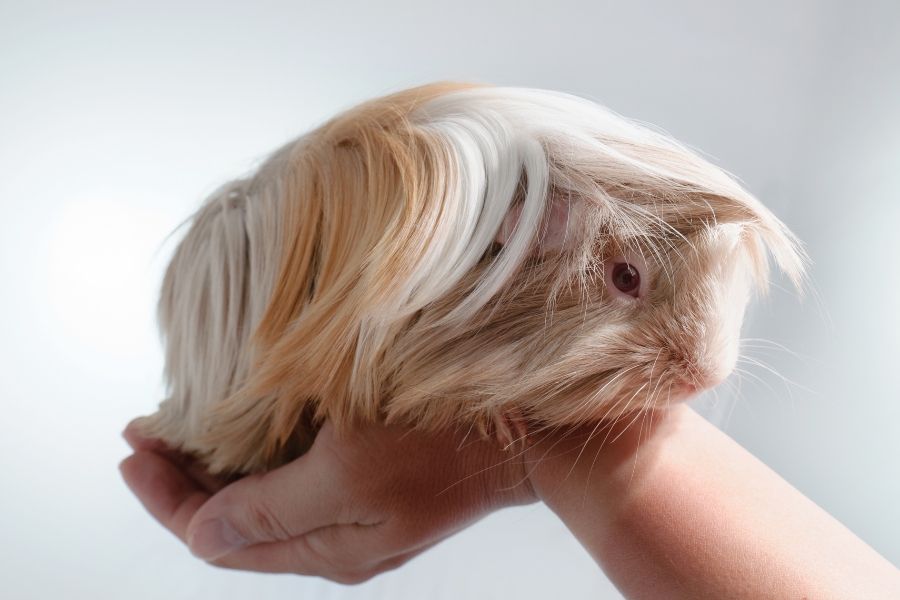
What is the Peruvian guinea pig like?
The Peruvian guinea pig stands out for its unique appearance, with its long coat as its most distinctive feature. Its coat can often grow longer than 30 centimeters, so it needs special care to keep it in top condition. Its body is sturdy and compact, with a broad head and large eyes that give it a sweet, friendly look.
In addition to its appearance, the Peruvian guinea pig is known for its curious, sociable personality. Although it may be shy at first, it usually forms a strong bond with its owners once it adjusts to its surroundings. It’s not unusual for these guinea pigs to seek attention and affection, becoming beloved members of the family.
As a social species, guinea pigs should ideally be kept in pairs, so it’s recommended to have at least two Peruvian guinea pigs together. This helps them socialize and avoid stress, since they typically live in groups in the wild.
Physical characteristics of the Peruvian guinea pig
The Peruvian guinea pig has distinctive physical characteristics that set it apart from other breeds. Here are some of its most notable features:
- Long coat: Its coat is one of its most distinctive features and feels soft and silky.
- Variety of colors: They come in a wide range of colors, including white, black, and brown, as well as combinations of these colors.
- Large eyes: Their eyes are large and expressive, adding to their visual appeal.
- Size: They are similar in size to other guinea pigs, but are often slightly larger because of their sturdy build.
Coat care is essential to keep them looking their best. It’s recommended that you brush them daily to prevent tangles and keep their coats in good condition.
Intensive coat care for the Peruvian guinea pig
The Peruvian guinea pig’s long coat needs special attention. Here are some essential care tips:
- Daily brushing: It’s essential to brush them every day to prevent tangles and mats.
- Occasional baths: Frequent bathing isn’t recommended, but an occasional gentle bath may be beneficial.
- Trimming the coat: If the coat grows too long, you can trim it to make maintenance easier.
- Check the skin: Check their skin regularly for parasites or irritation.
Proper coat care not only improves their appearance but also supports their overall health by helping prevent skin problems and discomfort.
What do Peruvian guinea pigs eat?
A proper diet for the Peruvian guinea pig is essential for its health and well-being. Its diet should include:
- Hay: Hay should be the foundation of its diet, as it promotes good digestion and dental health.
- Fresh vegetables: It’s important to offer a variety of fresh vegetables, such as lettuce, carrots, and bell peppers.
- Fruit: Fruit should be offered in controlled amounts as an occasional treat because it is high in sugar.
- Specialized pellets: Pellets formulated specifically for guinea pigs are available and can be a useful supplement.
Good digestive health is essential for guinea pigs, so it’s important to watch for any changes in their diet and adjust as needed.
Common Health Problems in Peruvian Guinea Pigs
Like any pet, Peruvian guinea pigs can be affected by various health problems. Some of the most common include:
- Dental problems: Guinea pigs’ teeth grow continuously, which can cause pain if they don’t wear down properly.
- Respiratory diseases: They can be susceptible to respiratory infections, especially in humid climates.
- Digestive problems: Indigestion can be a problem if they aren’t fed properly.
- Skin conditions: Neglecting coat care can lead to skin problems.
It’s essential to take your guinea pig to the veterinarian regularly for checkups and maintain good hygiene to help prevent these problems.
Where Can You Buy a Peruvian Guinea Pig?
If you’re interested in getting a Peruvian guinea pig, there are several options:
- Pet stores: Many pet stores often have Peruvian guinea pigs in stock.
- Shelters and rescue organizations: Adopting a guinea pig from a shelter can be an excellent option, giving an animal in need a second chance.
- Specialized breeders: You can look for breeders who specialize in Peruvian guinea pigs to make sure they’re well cared for.
Before buying, it’s important to do your research and make sure the place you get your guinea pig from is trustworthy and committed to animal welfare.
Frequently Asked Questions About Peruvian Guinea Pigs
Which Guinea Pig Breed Is the Most Affectionate?
The most affectionate guinea pig breed can vary from one individual to another, but Peruvian guinea pigs are generally known for being friendly and sociable. Their curious, adaptable nature helps them form strong bonds with their owners, making them excellent companions. It’s important to socialize them from a young age to encourage their affectionate nature.
What Is a Peruvian Guinea Pig’s Temperament Like?
The Peruvian guinea pig has a sociable, curious temperament. Although they may be shy at first, they usually become very affectionate once they feel comfortable in their surroundings. They’re active animals that enjoy exploring and playing, making them engaging and fun to be around. Their social nature also means they benefit from the company of other guinea pigs.
What Are Guinea Pigs Called in Peru?
In Peru, guinea pigs are commonly known as “cuyes.” This term is widely used in Peruvian culture, as cuy is also a traditional food in many regions of the country. However, when talking about pets, “guinea pig” is more familiar and preferred by their owners.
What’s the Difference Between a Guinea Pig and a Cuy?
The difference between a guinea pig and a cuy is mainly cultural and terminological. In Peru, “cuy” refers to the same species, but with a greater emphasis on its use as food, while “guinea pig” is generally used in the context of pets. Biologically, there is no difference; both are the same species, Cavia porcellus.