Swans are waterfowl known for their elegance and majestic bearing. These birds, with their long necks and plumage that can range from white to black, are fascinating not only for their beauty but also for their behavior and habitat. In this article, we’ll take an in-depth look at the different types of swans, their distinctive characteristics, what they eat, and the environments they inhabit.
What Are Swans?
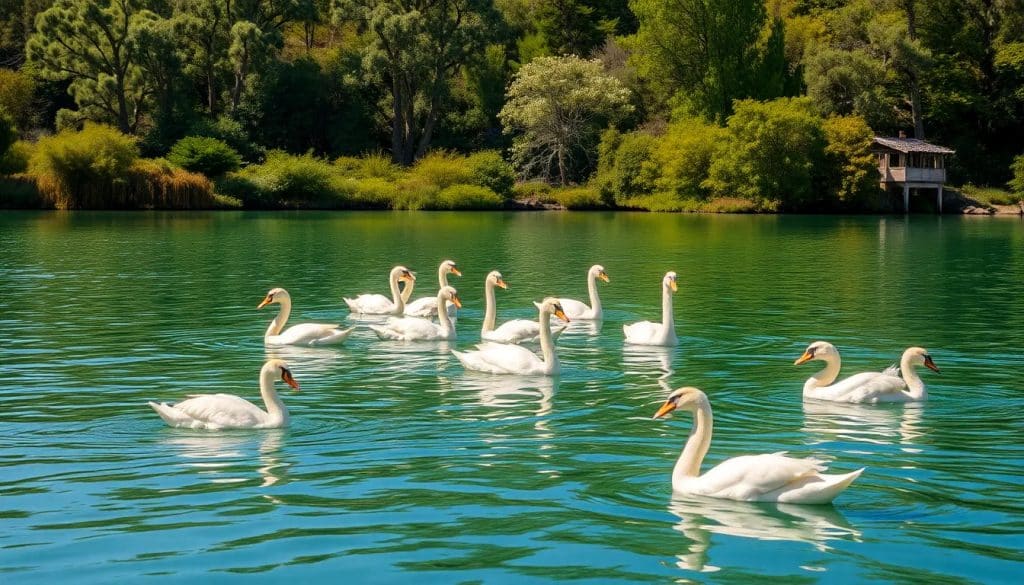
Swans are aquatic birds belonging to the family Anatidae. They are known for their wingspan, which can reach up to 2 meters, and their plumage, which varies by species. These birds are known for their monogamous behavior, forming lifelong pairs. Their primary habitat consists of calm waters, such as lakes and rivers, where they can feed and raise their young.
The mute swan, also known as the common swan, is perhaps the best-known species. Its white plumage and orange bill make it easy to recognize. Swans also play a crucial role in their ecosystems, helping maintain balance in their aquatic habitats.
How Many Types of Swans Are There?
There are several species of swans, each with unique characteristics. Some of the best known include:
- Mute swan: known for its white plumage and territorial behavior.
- Black swan: famous for its dark plumage and distinctive appearance.
- Whooper swan: distinguished by its melodious call and white plumage.
- Trumpeter swan: the largest of all, known for its loud call.
- Tundra swan: smaller in size and found in colder regions.
Each of these types of swans has specific adaptations that help them survive in different environments, from temperate lakes to Arctic regions.
What Are the Characteristics of Swans?
Swans have several distinctive characteristics that set them apart from other birds.
One of the most notable is their long, flexible neck, which allows them to reach food at the bottom of the water. Their plumage, generally white or black, also varies by species, adding to their varied appearance.
Additionally, their large size is a key factor in identifying them. Swans can weigh between 5 and 15 kilograms, depending on the species. Their webbed feet also help them swim easily in the water.
Finally, their social behavior is notable. Swans are monogamous animals and are often seen in pairs or family groups, caring for their young with great dedication.
What Do Swans Eat?
Swans are primarily herbivores, feeding on a variety of sources. Their diet consists mostly of:
- Aquatic vegetation: such as algae, reeds, and water lilies.
- Seeds and roots: which they obtain from vegetation along the banks.
- Invertebrates: although in smaller amounts, they may eat snails and larvae.
Swans use their long necks to dip into the water and reach vegetation on the bottom. This allows them to access a wide variety of foods, which is essential for their nutrition and health.
In some cases, swans also feed on grains and crops on land, especially during migration. This provides them with additional nutrients that are crucial for their energy and well-being.
What Is the Difference Between Male and Female Swans?
The differences between male and female swans can be subtle, but there are some notable characteristics.
Males are generally larger than females and have sturdier bills. However, in many species, such as the mute swan, both sexes have similar plumage, making them difficult to tell apart.
Males often display more territorial behavior, especially during the breeding season. This includes defending their nest and protecting their young, while females typically handle incubation.
In terms of vocalizations, males tend to make deeper sounds, while females are usually quieter. These differences help establish a hierarchy within pairs and social groups.
How Do Swans Reproduce and Hatch?
Swan reproduction is a fascinating process. During mating season, swans perform courtship rituals that include dances on the water and vocalizations.
Once a pair bond has formed, the female chooses a safe place, usually near the water, to build the nest. The nest is made from materials such as reeds, feathers, and grasses.
After an incubation period of 30 to 40 days, the young swans, known as cygnets, hatch. From birth, cygnets are cared for by both parents, who guide and protect them.
Cygnets stay with their parents for several months, learning to swim and feed themselves. This parental care is essential to their survival in an often-hostile environment.
Threats to Swans and Conservation
Despite their beauty, swans face several threats. Habitat loss is one of the most serious, as urban development and pollution affect aquatic ecosystems.
Poaching and changes to their natural environment also pose significant risks. Swans are considered species of conservation concern, and several programs are underway to protect their habitats and populations.
Conservation measures are essential to protect these birds and their environment. Educating people about the importance of swans and their role in the ecosystem can raise awareness and encourage conservation efforts.
Swan Facts
Swans are birds full of fascinating facts that make them even more interesting.
- They are often considered symbols of love and loyalty because of their monogamous behavior.
- Swans can live up to 20 years in the wild and longer in captivity.
- Their ability to migrate allows them to travel long distances, sometimes thousands of miles.
- They communicate using a variety of sounds, from whistles to trumpeting calls, each with a specific meaning.
Their plumage can also change in color depending on the time of year and their age, adding to their beauty. Swans are undoubtedly a fascinating group of birds that deserve to be studied and protected.
Frequently Asked Questions About Swans
How Many Types of Swans Are There?
There are around six recognized swan species. The most common include the Mute Swan, Black Swan, Whooper Swan, Trumpeter Swan, and Tundra Swan. Each of these species has special adaptations that help it thrive in its habitat.
What Are the Characteristics of Swans?
Swans are characterized by their large size, long necks, and varied plumage. They have interesting social behavior: they are monogamous and form strong bonds with their mates. Their calls and vocalizations are also distinctive and can vary between species.
What Do Swans Eat?
Swans have a mostly herbivorous diet, feeding on aquatic vegetation, roots, and occasionally invertebrates. They use their long necks to reach food in the water.
What Is the Difference Between Male and Female Swans?
Males are usually larger and have sturdier bills than females. However, many species have similar plumage, making them difficult to tell apart. Males may also show more pronounced territorial behavior during the breeding season.